
When a commercial kitchen floor is installed correctly, it should be something you stop thinking about for a very long time. The right system goes down, cures, and then just performs. It handles the daily abuse of a professional kitchen, passes health inspections, keeps your team safe, and stays easy to clean without demanding constant attention or repair. That’s what a properly installed epoxy floor delivers, and it’s the standard that any food service operator should expect from a professional installation.
What Does “Long-Lasting” Actually Mean for a Kitchen Floor?
Longevity in a commercial kitchen floor isn’t measured in the same way as it is in a showroom. A floor that looks beautiful for two years before delaminating, cracking, or developing sanitation problems hasn’t served its purpose. A long-lasting commercial kitchen floor is one that maintains its structural integrity, its hygienic properties, its slip resistance, and its chemical resistance throughout a service life measured in years, under the actual conditions of daily professional kitchen use.
Epoxy resin systems, when properly installed on a well-prepared substrate, meet that standard in a way that tile, vinyl, and untreated concrete simply don’t. The seamless, non-porous surface doesn’t develop the vulnerabilities that cause other flooring types to degrade: no grout joints cracking under thermal stress, no vinyl seams peeling at moisture intrusion points, no concrete surface dusting and absorbing contaminants. A professionally installed epoxy floor ages very differently from its alternatives.
How Does Proper Surface Preparation Extend Floor Life?
The longevity of any epoxy floor installation starts not with the resin but with what happens before the resin goes down. A bond that forms between epoxy and a contaminated or improperly profiled substrate will fail long before the resin itself degrades. Surface preparation is where the long-term durability of the installation is actually determined, and it’s where inexperienced contractors most often cut corners that cost clients dearly down the road.
HPS Flooring uses 800-pound diamond grinding equipment for surface preparation. The downward pressure of that machine creates a surface profile that provides both chemical and mechanical bonding surfaces for the resin. Their HEPA vacuum systems ensure that every particle of dust and debris is removed before the application begins. This preparation process is why their installations achieve the adhesion ratings that make primers unnecessary and the bond integrity that survives years of thermal cycling, chemical exposure, and heavy traffic.
What Role Does the Resin Formulation Play in Longevity?
Not all epoxy resins are created equal. The resins used in consumer-grade products from hardware stores are not the same formulations as the commercially specified systems that professional installers apply in food service environments. The difference matters enormously for long-term performance.
HPS Flooring uses resins specifically designed to withstand the specific stresses of commercial kitchen environments: repeated thermal shock from hot liquids, daily exposure to industrial strength sanitizers and degreasers, heavy rolling loads from kitchen equipment, and the constant foot traffic of a working kitchen team. These aren’t general-purpose materials adapted for kitchen use. They’re materials engineered for this application. For operators evaluating commercial kitchen flooring options that will genuinely hold up over a decade or more, material quality is as important as installation technique.
How Does the System Handle Thermal Shock Over Time?
Thermal shock is one of the most persistent challenges a commercial kitchen floor faces. Hot water from cooking operations hits the floor surface repeatedly throughout every service period. Steam cleaning equipment applies sharp temperature changes during cleaning routines. In cold storage adjacent areas, temperature differentials stress the floor from the opposite direction.
HPS Flooring’s urethane-based systems are specifically engineered for thermal shock resistance. The thermally cured resins maintain their bond integrity and surface properties under the repeated temperature changes that break down inferior flooring materials over time. That thermal stability is a core reason why their commercial kitchen flooring NJ installations continue performing years after installation, even in kitchen environments with particularly demanding thermal conditions.
What Maintenance Keeps an Epoxy Floor at Its Best?
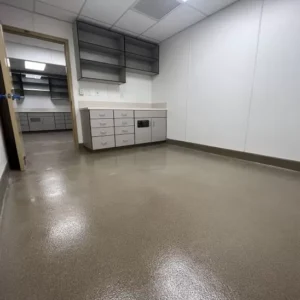
One of the genuine advantages of a properly installed epoxy system is how little it demands in daily maintenance. Regular sweeping removes loose debris from the surface. Damp mopping with appropriate cleaning agents handles spills, grease, and the residue from daily kitchen operations. The non-porous surface doesn’t require specialized cleaning tools, stripping treatments, or periodic refinishing like some other commercial floor types.
The chemical resistance built into HPS Flooring’s resin formulations means the floor withstands the harsh sanitizers that food service operations use for daily compliance without the surface degrading over time. That resistance preserves the floor’s cleanability and hygienic properties throughout its service life, which is exactly what long-term maintenance-free performance looks like in a commercial kitchen environment.
Why Does 37 Years of Experience Matter for Your Floor?
HPS Flooring has been installing commercial kitchen epoxy systems since 1988. Over 37 years of specialized work in food service environments across New Jersey, New York, and Pennsylvania has produced a depth of knowledge and a refinement of installation technique that newer contractors simply haven’t had time to develop. The specific challenges of commercial kitchens, from old butcher block flooring to aging concrete substrates to unusual layout configurations, are situations their team has encountered and solved repeatedly.
That experience is what their free consultation brings to every potential client. When HPS Flooring evaluates your kitchen floor, they’re not working from a generic script. They’re applying 37 years of specific, relevant experience to understand what your floor needs and recommend the solution that will actually deliver long-term performance in your specific environment.
Conclusion
A commercial kitchen floor that lasts is built on three things: the right material, proper surface preparation, and an experienced installer who understands what a professional kitchen actually demands. HPS Flooring delivers all three, backed by over 37 years of exclusive focus on commercial and industrial food service facilities. Their epoxy systems meet USDA and FDA compliance standards, provide built-in slip resistance, resist the chemical and thermal stresses of daily kitchen use, and require minimal maintenance throughout a service life that genuinely justifies the investment. For food service operators in New Jersey ready to install a floor they won’t have to think about for years, the free consultation from HPS Flooring is the right place to start.
FAQ
How long can a professionally installed epoxy kitchen floor last? With proper installation on a well-prepared substrate, a professionally installed epoxy system can serve a commercial kitchen for many years with minimal maintenance, significantly outlasting tile or vinyl under the same conditions.
What daily maintenance does an epoxy kitchen floor require? Regular sweeping and damp mopping with appropriate cleaning agents is all that’s needed. The seamless, non-porous surface doesn’t require stripping, refinishing, or specialized maintenance treatments.
Why is HPS Flooring a good choice for long-term commercial kitchen flooring in NJ? HPS Flooring has installed epoxy systems in commercial kitchens since 1988, bringing over 37 years of specialized experience to every project. They work exclusively with commercial and industrial food service facilities and offer a free consultation to every potential client.