


You hear it after every bad storm. “It looked fine last week.” And it probably did. But chinooks, wet spring snow, and those bone-dry August stretches wear trees down in ways you can’t spot from the kitchen window. Call a professional when a tree is dead, leaning, damaged, or too close to your house or a power line. Here’s how to spot those moments early.
What Are the Signs a Tree Is Done?
Start at the top. If more than a third of the crown stays bare in July, something’s wrong. Check the trunk for deep vertical cracks and the base for mushrooms or soil pushed up on one side. A new lean is the worst sign. It usually means the roots are letting go.
One red flag? Keep watching. Two or three? Stop watching, and book tree removal before the next windstorm does the deciding.
Tree Trimming and Tree Pruning Aren’t Twins
They’re not the same job.
Tree trimming is basic upkeep. You’re shortening branches that scrape the roof, crowd the walkway, or hide the stop sign at the corner. Tree pruning goes deeper: you’re taking out dead, diseased, or crossing wood so the tree stays strong, especially under a heavy April snowfall.
When you do it, it matters too. Late winter, while the tree’s dormant, suits most species. Elms don’t. Alberta bans elm pruning from April 1 to September 30, since fresh cuts draw in the beetles that carry Dutch elm disease. Check first. Cut second.
Is Stump Grinding Enough, or Do You Need Stump Removal?
The tree’s gone. The stump isn’t.
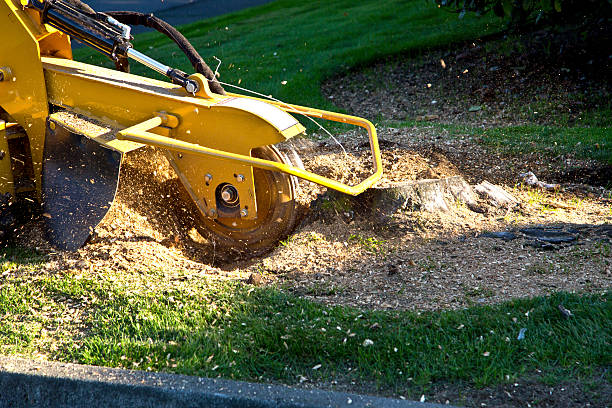
Stump grinding shreds it a few inches below the surface, and it’s the cheaper, tidier route. Stump removal hauls out the whole stump plus the big roots, which leaves a hole the size of a small hot tub. Either way, you’ll be backfilling.
My take: only pay for full removal if you’re building or planting right on that spot. For a regular lawn, grind it, spread some topsoil, and move on with your weekend.
Some trees need a specialist, not just a crew. Think of a large spruce with thinning needles, a hollow poplar, or anything leaning toward the neighbor’s fence. That’s the time to bring in a certified Calgary arborist. They’ll figure out what’s actually wrong, tell you straight whether the tree can be saved, and plan each cut so your garage stays in one piece.
When Does a Tree Problem Become an Emergency?
A tree on your roof. A trunk split down the middle. A big limb over the driveway. These don’t wait for Monday, and that’s when you phone for emergency tree service.
Power lines are a different level of seriousness. If anything’s touching or close to a line, stay well back and call your utility before anyone else. And don’t grab the chainsaw to “just get it off the car.” Broken limbs hold a lot of stored tension, and they snap unpredictably.
How Do You Choose Who Shows Up?
Be wary of anyone knocking on doors after a hailstorm with a price that sounds too good. A decent tree service will carry liability insurance and WCB coverage, put the quote in writing, and spell out what’s included. Ask about cleanup and hauling specifically, since that’s where low quotes hide extra fees.
Don’t Wait for the Next Chinook
If a tree has you worried, trust that feeling. Have someone qualified look at it this week, while it’s an easy decision and not a very expensive one.
Frequently Asked Questions
- What does it cost to take down a tree in Calgary?
Wide range, honestly. Size, access, and what’s sitting underneath or beside the tree all push the price around. Get a few written quotes and read what’s actually included.
- Can I just prune my trees myself?
Little branches you can reach from the ground? Sure, grab the loppers. Anything that needs a ladder, a chainsaw over your head, or a spot near wires? Please don’t. Ladders are where weekend projects go sideways.
- Do I have to get rid of the stump?
Nope, not strictly. It’ll rot eventually, though “eventually” can mean years. Meanwhile, it trips the kids and may throw up random shoots. Tucked behind the shed? Ignore it. Smack in the middle of the lawn? Get it grounded.
- When should I do tree trimming?
Late fall and winter suit most trees, because bare branches show you exactly what you’re dealing with. Elms are the exception, as covered above. Hazardous branches are another exception: those can’t wait for the right season.
- How fast can a crew get to me in an emergency?
Depends on the day. After a big windstorm, every phone in the city is ringing, and crews work through the worst jobs first. Tell them straight away if someone’s in danger, if the tree is on your house, or if wires are involved. Then ask for a real arrival window.